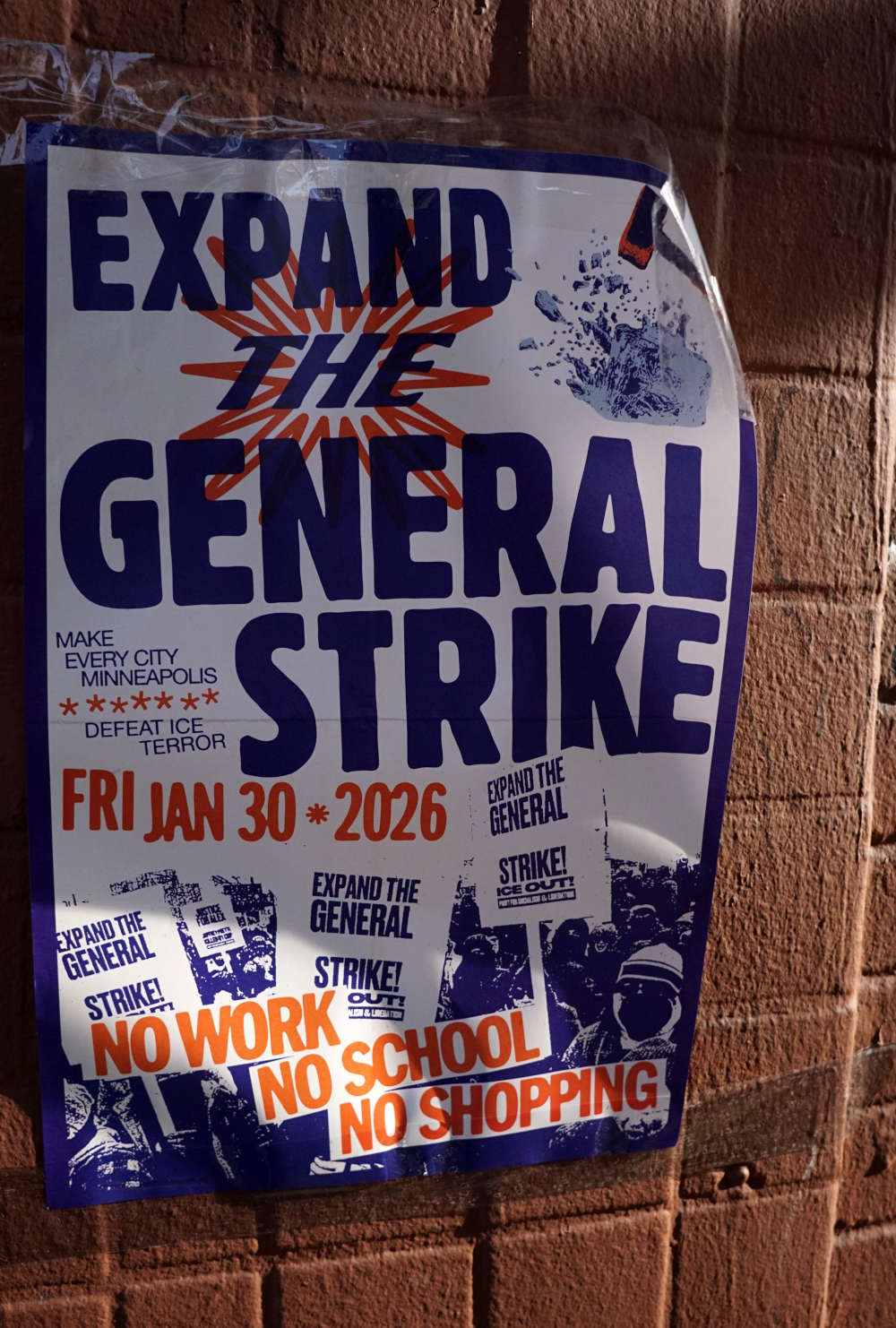
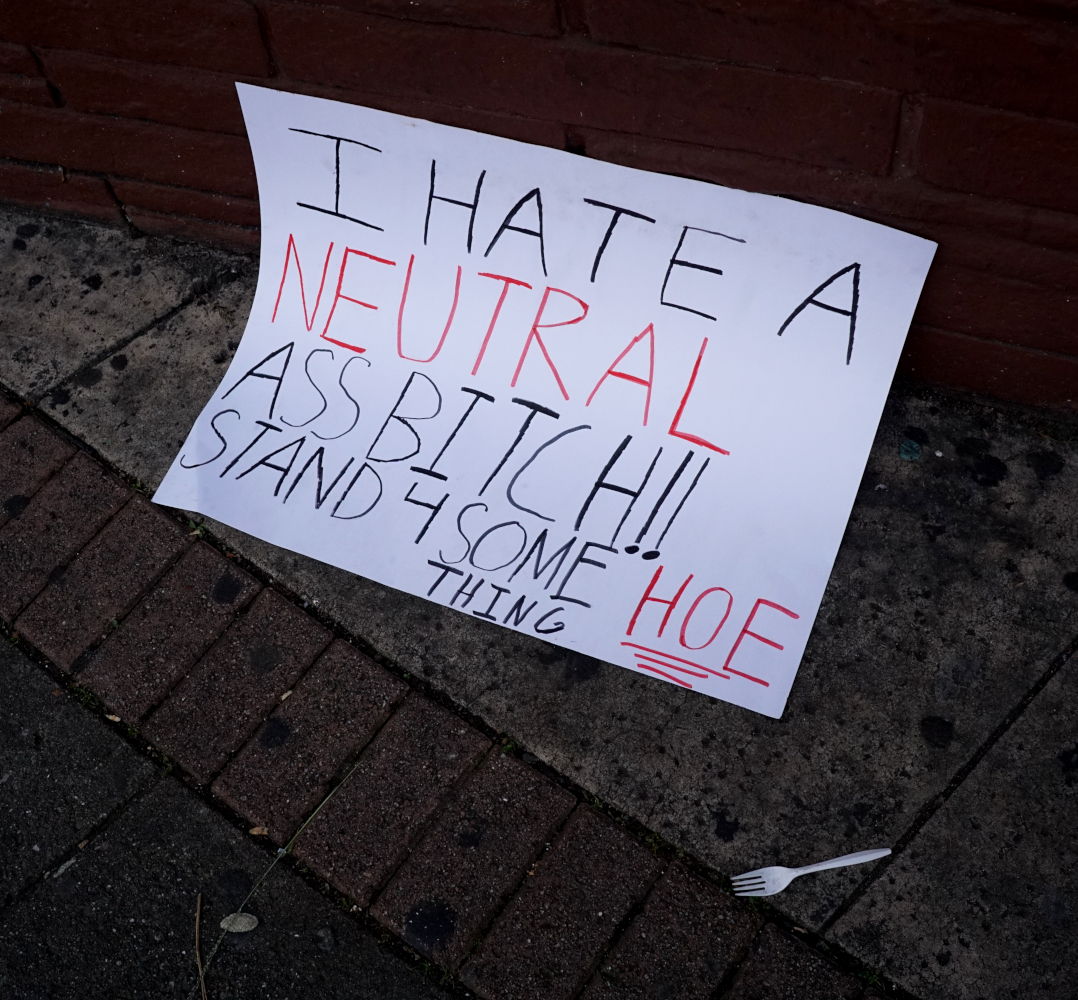
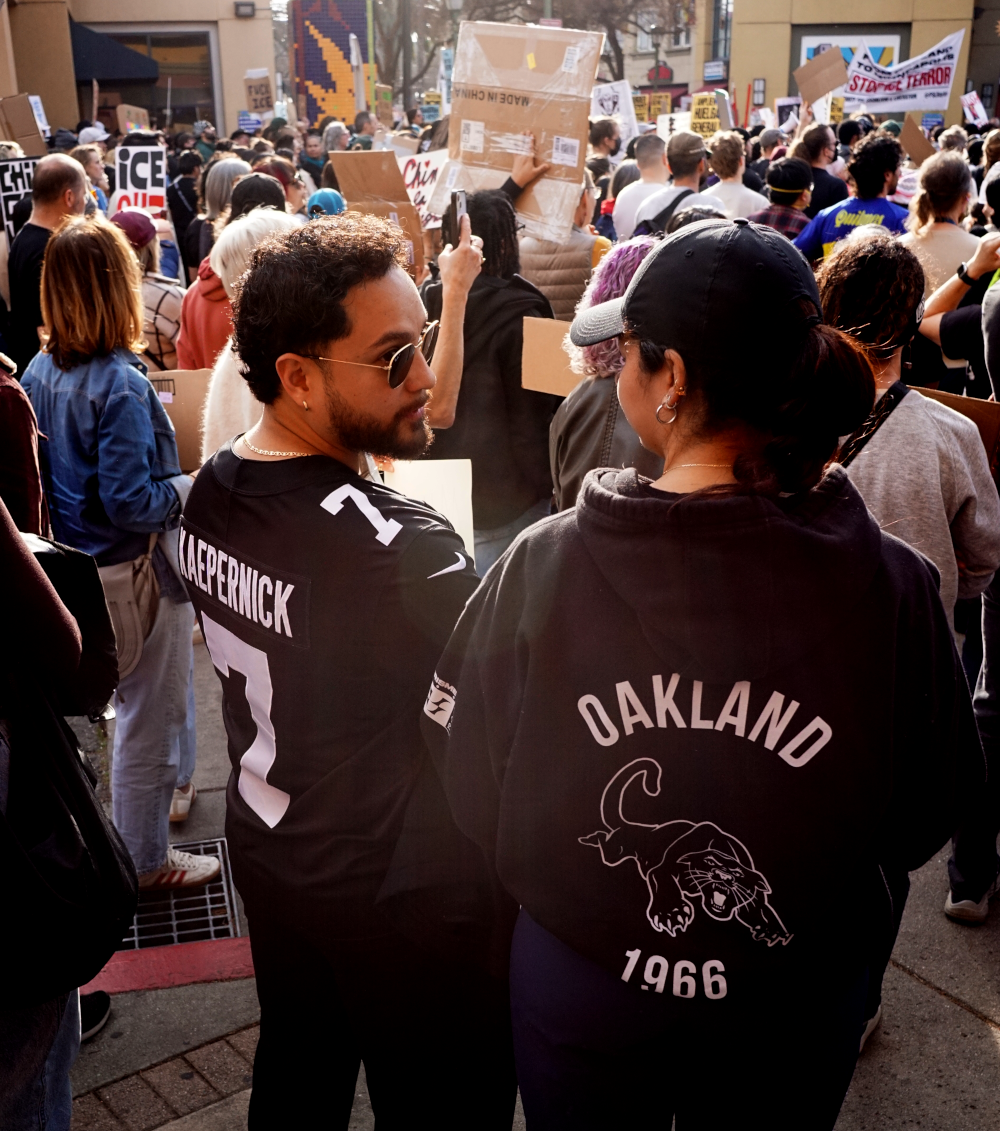
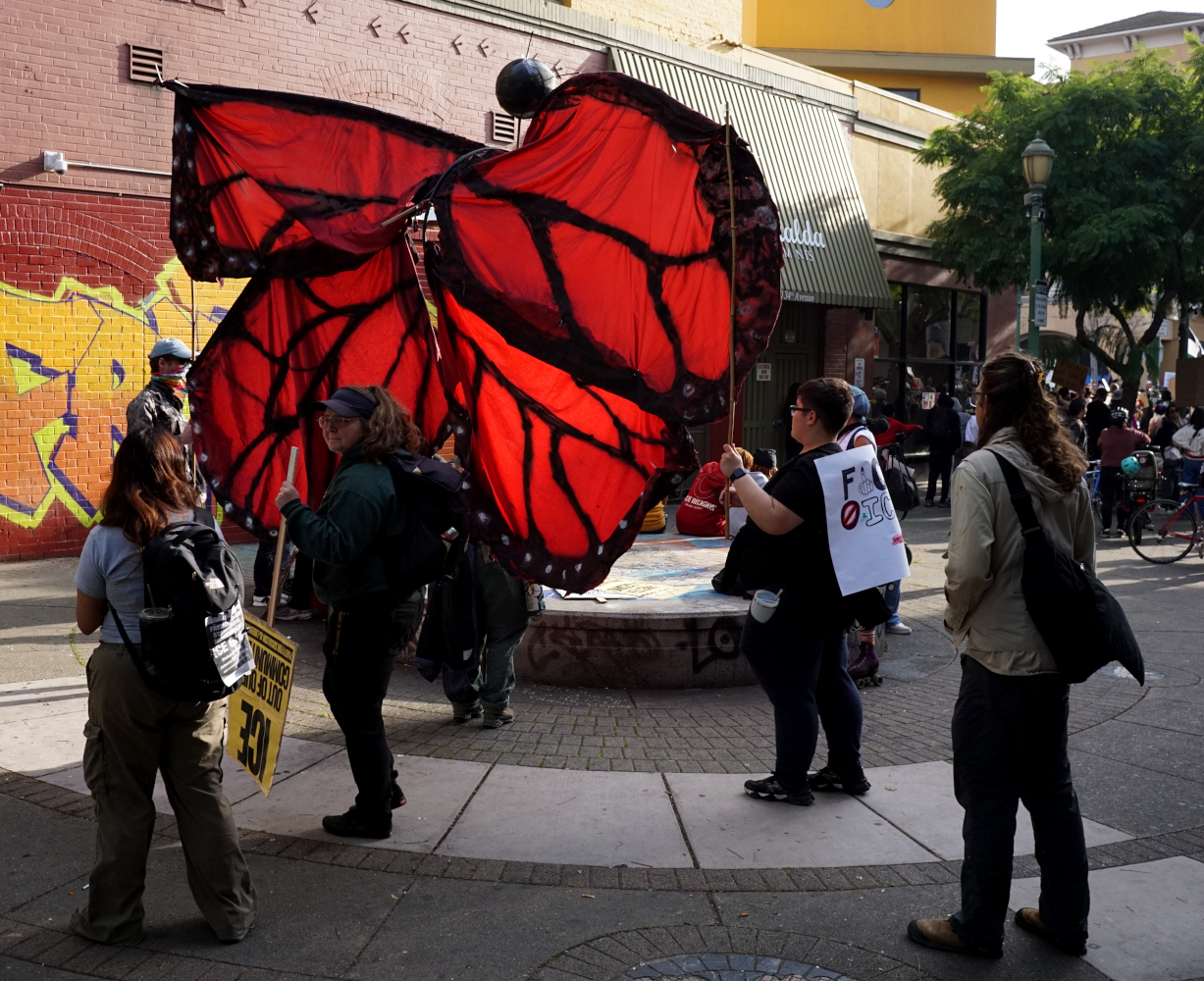
Melt ICE in Fruitvale
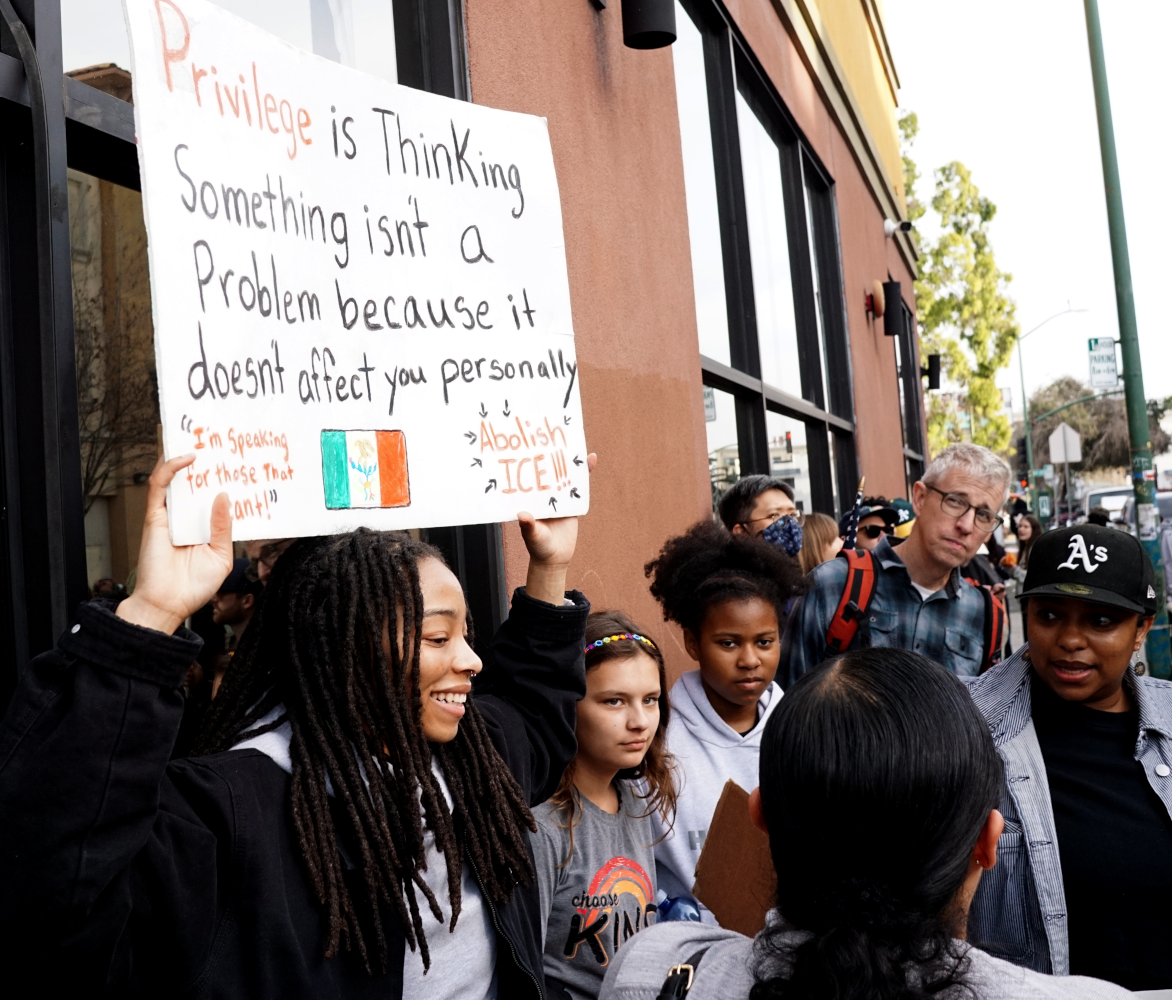

Eric Levitz in New York Magazine on how political institutions keep American politics polarized between a median Democratic position and a right-of-median Republican position now that the urban/rural split between the two parties is entrenched:
By itself, the conservative movement’s apocalyptic paranoia might not constitute an existential threat to American democracy. The depths of the American right’s radicalism are formidable, but its breadth of popular support is not. The donors, activists, and primary voters who set the GOP’s agenda are more ideologically extreme than the Republican Party’s median general-election supporter. And so long as the GOP caters to the former, its national coalition is likely to be a minority one. Thus, if the United States were a majoritarian democracy — in which the Republican Party had to win a majority of the nation’s votes to have a hand in federal governance — then the party might soon find itself with sufficient incentive to marginalize its most extreme elements. But the U.S. is a very different kind of polity.
Every elected branch of the U.S. government structurally overrepresents low-density areas. And since America’s two parties are now polarized along urban-rural lines, the GOP has ballots to burn. Losing the popular vote in six of the last seven presidential elections hasn’t stopped Republicans from holding the White House for a majority of this millennium. Republican senators have represented a majority of America’s population for only two years in the last four decades — but Republicans have boasted Senate majorities for more than half of that period anyway. And many election forecasters expect the pro-Republican biases of the Senate and Electoral College to grow more pronounced in the years to come.
Those biases, combined with midterm elections that inherently favor the sitting president’s opposition — and a two-party system that ensures Republicans will always be the only option for “change†voters when a Democrat is in office — set a high floor beneath how far the GOP can realistically fall. One testament to this reality lies in the mounting evidence that Republicans have actually increased their support among nonwhite voters during the Trump era, even as the party has catered to white racial animus. With only two parties to choose from, socially conservative and/or disaffected nonwhite voters have proved willing to rally to the GOP banner even as Republicans have replaced their dog-whistle appeals to white grievance with foghorns. For these reasons, it is unlikely that Republicans will be consigned to the political wilderness long enough to make a break with the conservative movement thinkable.
-- Eric Levitz, "The RNC Has Made a Compelling Case for America’s Imminent Collapse," New York Magazine, August 25, 2020.

Fire Victims Are Turning their Attention to the Future:
Caitlin Marchetti, 23, of Guerneville, decided not to evacuate Saturday or Monday.
She and her boyfriend, Jamie Miller, 31, went to a supermarket on Sunday to see how gas stations would handle the logistics of transporting gas after the Tubbs Fire burned down some stations. The emergency gas sign near a Chevron gas station still read: “Due to extensive damage due to #shelter-in-place status please pull into only required drop off locations until resumption of services.â€
Ms. Marchetti was unsure how the stations would work in the long term. But she said in the meantime, she was happy to be safe.
There is a “sunny spot†on her family’s property in Sonoma County, she said, in a reservoir where it’s cool. They are making plan to put on their clothes and cross their fingers that the emergency button will go off.

At the beginning of the war, two British chemists, V. E. Yarsley and E. G. Couzens, prophesied with surprising accuracy and quaintly utopian innocence what middle-class childhood in the 1970s would be like. “Let us try to imagine a dweller in the ‘Plastic Age,’†they wrote in the British magazine Science Digest.
This creature of our imagination, this ‘Plastic Man,’ will come into a world of colour and bright shining surfaces, where childish hands find nothing to break, no sharp edges or corners to cut or graze, no crevices to harbour dirt or germs, because, being a child his parents will see to it that he is surrounded on every side by this tough, safe, clean material which human thought has created. The walls of his nursery, all the articles of his bath and certain other necessities of his small life, all his toys, his cot, the moulded perambulator in which he takes the air, the teething ring he bites, the unbreakable bottle he feeds from . . . all will be plastic, brightly self-coloured and patterned with every design likely to please his childish mind.
Here, then, is one of the meanings of the duck. It represents this vision of childhood—the hygienic childhood, the safe childhood, the brightly colored childhood, in which everything, even bathtub articles, have been designed to please the childish mind, much as the golden fruit in that most famous origin myth of paradise “was pleasant to the eyes†of childish Eve. Yarsley and Couzens go on to imagine the rest of Plastic Man’s life, and it is remarkable how little his adulthood differs from his childhood. When he grows up, Plastic Man will live in a house furnished with “beautiful, transparent, glass-like materials in every imaginable form,†he will play with plastic toys (tennis rackets and fishing tackle), he will, “like a magician,†be able to make “what he wants.†And yet there is one imperfection, one run in this nylon dream. Plastic might make the pleasures of childhood last forever, but it could not make Plastic Man immortal. When he dies, he will sink “into his grave hygienically enclosed in a plastic coffin.†The image must have been unsettling, even in 1941; that hygienically enclosed death too reminiscent of the hygienically enclosed life that preceded it. To banish the image of that plastic coffin from their readers’ thoughts, the utopian chemists inject a little more technicolor resin
into their closing sentences. When “the dust and smoke†of war had cleared, plastic would deliver us “from moth and rust†into a world “full of colour . . . a new, brighter, cleaner, more beautiful world.â€
-- Donovan Hohn, "Moby-Duck, or, the Synthetic Wilderness of Childhood," Harper's Magazine, January 2007.

On July 20th, James Hansen, the former NASA climatologist who brought climate change to the public's attention in the summer of 1988, issued a bombshell: He and a team of climate scientists had identified a newly important feedback mechanism off the coast of Antarctica that suggests mean sea levels could rise 10 times faster than previously predicted: 10 feet by 2065. The authors included this chilling warning: If emissions aren't cut, "We conclude that multi-meter sea-level rise would become practically unavoidable. Social disruption and economic consequences of such large sea-level rise could be devastating. It is not difficult to imagine that conflicts arising from forced migrations and economic collapse might make the planet ungovernable, threatening the fabric of civilization" . . . .
James Hansen, the dean of climate scientists, retired from NASA in 2013 to become a climate activist. But for all the gloom of the report he just put his name to, Hansen is actually somewhat hopeful. That's because he knows that climate change has a straightforward solution: End fossil-fuel use as quickly as possible. If tomorrow, the leaders of the United States and China would agree to a sufficiently strong, coordinated carbon tax that's also applied to imports, the rest of the world would have no choice but to sign up. This idea has already been pitched to Congress several times, with tepid bipartisan support. Even though a carbon tax is probably a long shot, for Hansen, even the slim possibility that bold action like this might happen is enough for him to devote the rest of his life to working to achieve it. On a conference call with reporters in July, Hansen said a potential joint U.S.-China carbon tax is more important than whatever happens at the United Nations climate talks in Paris.
One group Hansen is helping is Our Children's Trust, a legal advocacy organization that's filed a number of novel challenges on behalf of minors under the idea that climate change is a violation of intergenerational equity — children, the group argues, are lawfully entitled to inherit a healthy planet.
A separate challenge to U.S. law is being brought by a former EPA scientist arguing that carbon dioxide isn't just a pollutant (which, under the Clean Air Act, can dissipate on its own), it's also a toxic substance. In general, these substances have exceptionally long life spans in the environment, cause an unreasonable risk, and therefore require remediation. In this case, remediation may involve planting vast numbers of trees or restoring wetlands to bury excess carbon underground.